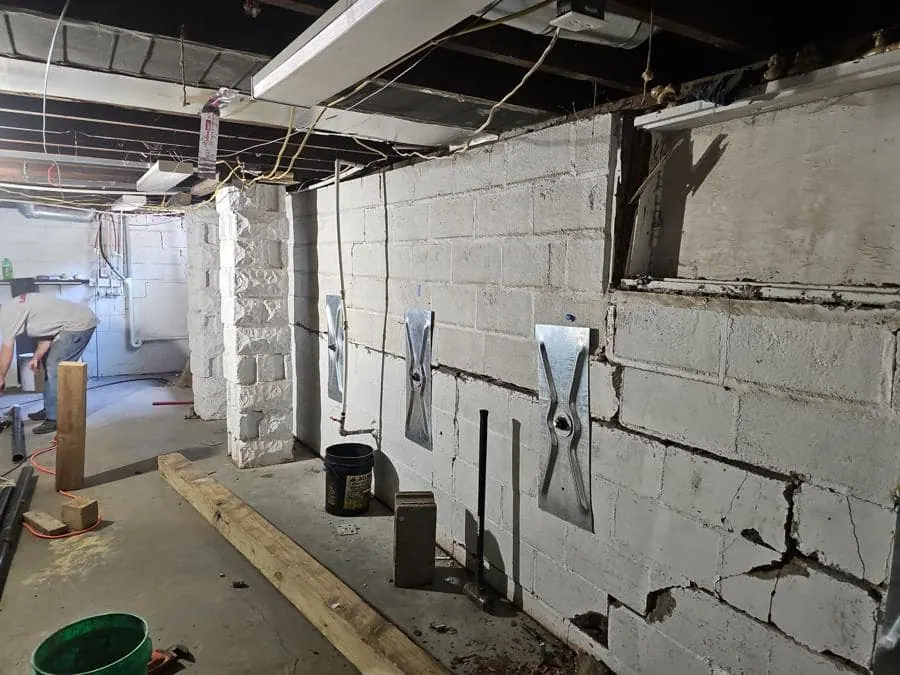
If a contractor has told you your home is sinking, the choice between push piers vs helical piers is probably the biggest decision in front of you — and most St. Louis homeowners have never heard of either until the day they need one. Both are permanent, engineered fixes that transfer your foundation's weight down to stable soil or bedrock. The difference is how they get there, and that difference is what determines which one belongs under your house.
Quick Answer
In the push piers vs helical piers matchup, push piers use the weight of your house to drive steel pipe down to load-bearing strata, making them ideal for heavy, settling structures. Helical piers are screwed into the soil like a giant anchor bolt and work better for lighter loads, new construction, and St. Louis's soft clay where there's no house weight to push against yet. For most settling homes here, push piers are the answer; for lighter additions and exterior structures, helical piers usually win.
At St. Louis Foundation Repairs, we've spent 30+ years installing both systems across the Greater St. Louis metro. The region's expansive clay and brutal wet-to-dry swings make pier selection more than a coin flip — pick the wrong system and you can spend five figures stabilizing a foundation that keeps moving anyway. Here's how we decide.
Push piers vs. helical piers — two permanent fixes for a settling foundation in St. Louis.
How do push piers work?
In the push piers vs helical piers comparison, push piers are the system most St. Louis homeowners end up with. A push pier is a section of high-strength steel pipe that's hydraulically driven straight down beneath your footing, one segment at a time, until it hits soil dense enough — or bedrock — to carry the load. The clever part is that the installer uses the structure's own weight as the reaction force to push each segment deeper. Once the pier reaches load-bearing strata, the foundation's weight is transferred off the failing soil and onto the pier.
Because push piers rely on the building's weight to advance, they shine under heavy, fully-built structures — a settled brick two-story, a sunken garage corner, a porch pulling away from the house. In much of St. Louis County, competent bearing soil sits well below the active clay zone, and a push pier can reach it. When conditions allow, that same hydraulic force can also lift the foundation back toward its original elevation, closing cracks and re-leveling doors and windows.
- Best for: heavy, existing homes that have already settled
- Reaches: deep dense soil or bedrock, driven by structure weight
- Bonus: can often lift the foundation back toward level, not just stop the movement
How do helical piers differ?
The other half of the push piers vs helical piers question is the helical system. A helical pier looks like a giant screw — a steel shaft with one or more helix-shaped plates welded near the tip. Instead of being pushed, it's turned into the ground with hydraulic torque, screwing itself down to the depth where the helices grip firm soil. Because it generates its own capacity through that screwing action, a helical pier doesn't need the weight of a finished house to install.
That's exactly why helical piers win where push piers struggle: lighter loads and situations with no structure weight to push against. Think new-construction footings, room additions, deck and porch supports, stoops, and exterior slabs. They install fast, the torque gives a real-time read on the soil's holding capacity as it goes in, and they work in tighter access spots. The trade-off is that on a heavy settled home in deep clay, a helical pier may not reach the same load-bearing depth a push pier can.
- Best for: lighter structures, new construction, additions, decks, exterior slabs
- Reaches: firm soil via torque — no building weight required
- Bonus: installs in tight-access areas and gives instant capacity feedback
Push piers vs helical piers: side-by-side comparison
Here is the push piers vs helical piers breakdown at a glance, so you can see exactly where each system wins:
| Factor | Push Piers | Helical Piers |
|---|
| How it installs | Hydraulically pushed down using the home's weight | Screwed in with hydraulic torque — no house weight needed |
| Ideal load | Heavy, existing structures | Lighter structures & new construction |
| Common St. Louis use | Settled homes, garages, sunken corners | Additions, decks, porches, exterior slabs |
| Can lift foundation? | Yes, often back toward level | Stabilizes; lift is more limited |
| Reaches bedrock/deep strata | Yes — driven to refusal | Depth limited by soil torque |
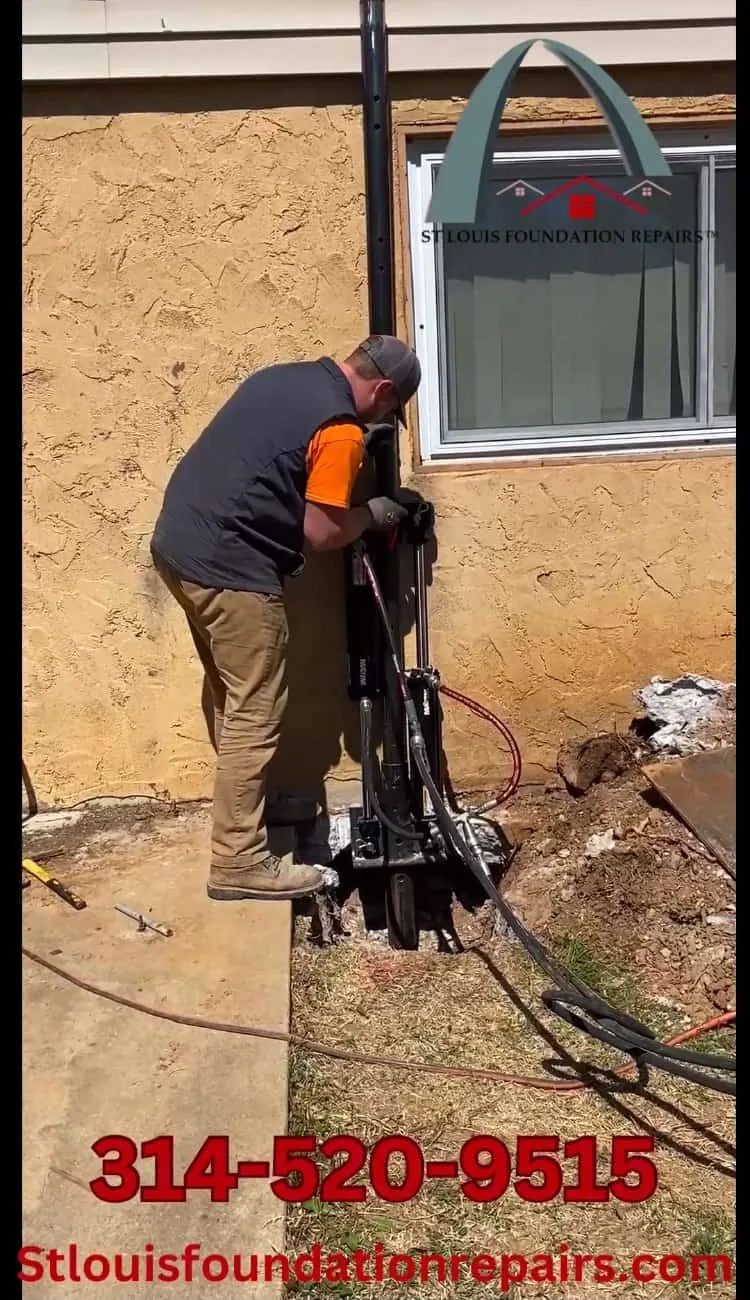
Push piers vs helical piers: a steel push pier driven to load-bearing strata beneath a settled footing.
Which pier does St. Louis soil actually call for?
The Greater St. Louis region sits on some of the most aggressive expansive clay in the Midwest — locally called "gumbo." It swells with tremendous force when it takes on water through our wet springs, then shrinks and pulls away from footings during summer heat, leaving voids the foundation drops into. The U.S. Geological Survey identifies these clay soils as a leading cause of foundation damage nationwide, and you can read more in the USGS overview of expansive soils.
For a typical settled home over this clay, push piers are usually the stronger choice because they can be driven through the unstable zone down to soil dense enough to hold — and the house's weight makes that possible. For lighter additions, garages built without a basement, or exterior concrete, helical piers often make more sense because there's not enough weight to drive a push pier and the screw-in design carries the lighter load fine. This is exactly why the push piers vs helical piers decision is best made on-site, not over the phone: the right answer changes from one corner of the same house to another.
See how we handle both systems on our foundation piering services page, or review the seven warning signs of foundation problems if you're not sure whether you need piering yet.
What does foundation piering cost in St. Louis?
When homeowners weigh push piers vs helical piers, cost is usually the next question. For foundation piering in the St. Louis area, the typical investment runs $5,000–$20,000, depending on how many piers the structure needs, how deep they have to go to reach bearing soil, and access to the work zone. Push pier and helical pier projects price out similarly per pier — what moves the number is pier count and depth, not the system name. Every home is different, which is why we never quote piering without putting eyes and an engineer's read on the foundation first.
When you compare bids, look past the bottom line: confirm the warranty is lifetime and transferable, check years in business, and make sure the quote treats the cause (the failing soil) and not just the visible crack. A cheap quote that ignores soil conditions is the most expensive repair you can buy.
Push piers vs helical piers: frequently asked questions
What is the difference between push piers and helical piers?
The core of the push piers vs helical piers difference is the install method: push piers are hydraulically driven straight down using the weight of your house, while helical piers are screwed into the ground like a giant anchor bolt and don't need the building's weight to install. Push piers suit heavy, settled homes; helical piers suit lighter structures and new construction.
Which is better for a settling house in St. Louis?
For most settling homes in St. Louis, push piers are the better choice because they can be driven through our expansive clay down to dense bearing soil, and the home's own weight makes that possible while often lifting the foundation back toward level. A free inspection confirms it for your specific soil.
Can foundation piers lift my house back to level?
In the push piers vs helical piers comparison, lift potential favors push piers — they can frequently raise a settled foundation back toward its original elevation, closing cracks and re-aligning doors and windows, though the achievable lift depends on how long the home has been settling and its current condition. The goal is always stabilization first, with lift as a bonus where the structure allows.
How long does pier installation take?
Most residential piering projects in St. Louis take one to three days, depending on the number of piers and site access. During your free inspection we give you a written timeline and a complete estimate specific to your home before any work begins.
Key Takeaways
The push piers vs helical piers choice comes down to three things — your soil, your structure's weight, and how far it has moved:
- Push piers use your home's weight to reach deep bearing soil — best for heavy, settled houses, and can often lift the foundation back toward level.
- Helical piers screw into the soil without needing building weight — best for lighter loads, additions, decks, and new construction.
- In St. Louis's expansive clay, the right pick can vary corner to corner — only an engineering inspection settles it.
- Piering runs roughly $5,000–$20,000; pier count and depth drive the price, not the system name.
- Get a free inspection before committing to either system.
Get an engineer's read before you choose
If your home anywhere in the Greater St. Louis metro is showing signs of settling, St. Louis Foundation Repairs offers free inspections and no-pressure quotes. On every job we weigh push piers vs helical piers for your specific conditions, install both systems, and recommend whichever your soil and structure actually call for, and back every structural repair with a lifetime transferable warranty. Owner Kent Schrum has 30+ years in foundation repair and is personally involved in every project.
Call us today at (314) 520-9515 or request your free quote online. We serve St. Louis, St. Charles, O'Fallon, Chesterfield, Florissant, Ballwin, Kirkwood, Wentzville, and the surrounding metro.
About the Author
Kent Schrum is the owner of St. Louis Foundation Repairs with 30+ years in foundation repair and structural work. He has personally overseen thousands of foundation repair and piering projects across the Greater St. Louis metro.
Related: Foundation Piering · Bowing Wall Repair · Foundation Repair FAQs · Recent Projects
Not Sure Which Pier Your Foundation Needs?
Free inspections · Honest engineering assessments · 30+ years in the St. Louis area
Filed under:
About St. Louis Foundation Repairs. Family-owned foundation repair and basement waterproofing contractor serving the Greater St. Louis metro since 1992. Owner Kent Schrum has personally overseen thousands of crack repair, waterproofing, piering and concrete lifting projects.
Request a free inspection or call
(314) 520-9515.