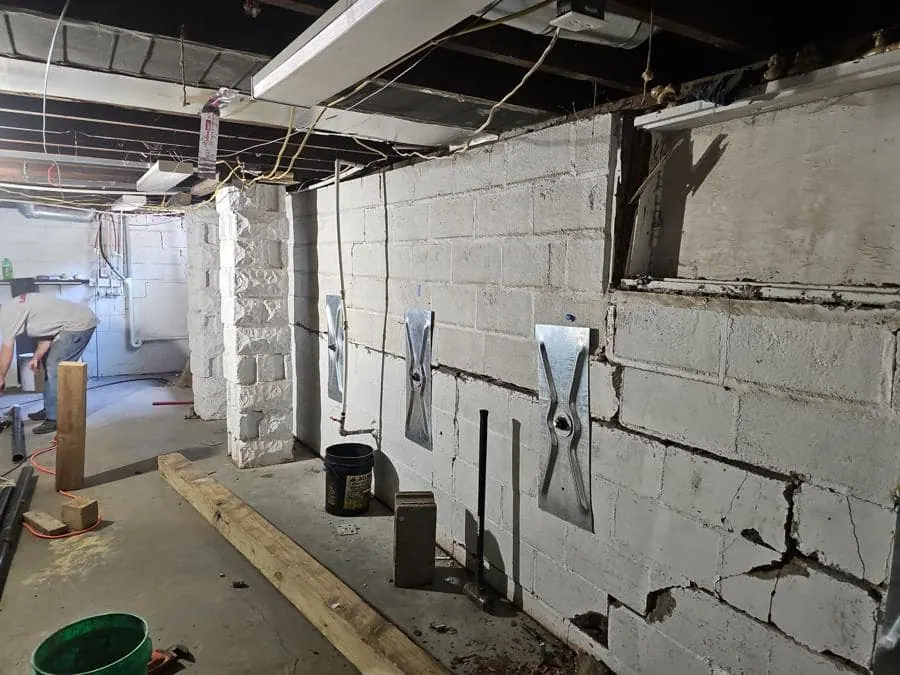
At St. Louis Foundation Repairs, we've spent 30+ years diagnosing and repairing foundations across the Greater St. Louis metro. The region's expansive clay soil and dramatic wet-to-dry swings make this more than a textbook question — get it wrong and you can spend thousands fixing the wrong thing. Here's how we think it through, in plain language.
The Complete Guide to Foundation Crack Types in St. Louis Homes — serving St. Louis, MO and surrounding counties.
Quick Answer
When St. Louis homeowners ask about foundation crack types St. Louis: Not all foundation cracks are created equal. Learn which cracks in your St. Louis home are cosmetic and which ones signal serious structural problems that need professional attention. For a free professional assessment anywhere in the St. Louis area, call (314) 520-9515.
Vertical cracks: Normal shrinkage vs. structural concern
Choosing the right approach for foundation crack types St. Louis comes down to matching the method to the exact failure pattern in front of you. What works for one type of damage can be completely wrong for another, and the difference often isn't obvious to an untrained eye.
Among our foundation crack repair options, each method suits different conditions — soil type, structure weight, how far things have moved, and access. We assess all of those together, then recommend the approach that gives the most durable, cost-effective result.
The worst outcome is the wrong repair chosen because it was cheapest, or because the contractor only sells one solution. We carry the full range, so our recommendation is driven by what your home needs — not by what's in the truck.
The thing most homeowners get wrong about foundation crack types St. Louis is assuming it will hold steady — in St. Louis clay, problems left alone tend to accelerate.
Horizontal cracks: Soil pressure and what it means for your walls
Most foundation crack types St. Louis issues in this region trace straight back to Missouri's expansive clay soil — locally nicknamed "gumbo." This clay has an exceptionally high shrink-swell potential: it drinks in water during our wet springs and expands with tremendous force, then dries out under summer heat and shrinks away from the foundation, leaving voids the structure can drop into.
That cycle repeats dozens of times a year. Layer on freeze-thaw winters and an average 42 inches of annual rainfall — heaviest April through June — and you have relentless, year-round stress on residential foundations. According to USGS data on expansive soils, these soils can exert more than 15,000 pounds of pressure per square foot against foundation walls.
Understanding your specific soil is step one of any honest assessment. Two homes on the same block can sit on noticeably different conditions depending on grading, drainage history, and how the lot was originally prepared.
In our experience, staying ahead of foundation crack types St. Louis is far cheaper than reacting to it after the damage compounds.
Understanding foundation crack types St. Louis is step one; acting before the next wet-to-dry soil swing is what actually protects the foundation.
Diagonal cracks: Settlement patterns and warning signs
Foundation problems almost never announce themselves with a single dramatic event. They build gradually — a hairline crack, a door that starts to stick, a faint musty smell — which is exactly why early recognition is so valuable. By the time the damage is obvious, it has usually been progressing for months or years.
These are the warning signs we tell every St. Louis homeowner to watch for:
- Cracks in foundation walls, floors, or exterior brick — horizontal and stair-step patterns are the most concerning
- Doors and windows that stick or won't latch — especially when several start at once
- Uneven or sloping floors you can feel as you walk through a room
- Gaps opening between walls and the ceiling or floor
- Water, dampness, or staining in the basement or crawl space after rain
- A chimney pulling away from the house or visibly leaning
Any one of these alone may be minor; several together is a clear signal. When you spot them, a professional inspection catches foundation crack types St. Louis early — always far cheaper than waiting.
Related: Our Foundation Crack Repair services for St. Louis area homeowners.
When homeowners act early on foundation crack types St. Louis, they protect their largest investment for a fraction of what a deferred repair runs.
Stair-step cracks in block foundations: What they indicate
When it comes to stair-step cracks in block foundations, St. Louis homeowners face conditions that make foundation crack types St. Louis more pressing here than in most parts of the country. Our expansive clay soil, 42 inches of annual rainfall, and hard freeze-thaw winters all feed directly into how this plays out — and into how long any given repair will hold up.
What they indicate is one of the specific things we examine closely, because it tells a story about what the foundation is doing. In St. Louis's expansive clay, what they indicate rarely appears in isolation — it usually travels with other small signals that, read together, point to the underlying cause.
We'll tell you honestly whether it's urgent, worth monitoring, or nothing to worry about — and we'll show you the evidence behind that call rather than asking you to take it on faith.
Decades of local work mean we've seen nearly every variation foundation crack types St. Louis takes across St. Louis soils and home styles.
When to call a professional: The 1/4-inch rule and other benchmarks
When it comes to when to call a professional, St. Louis homeowners face conditions that make foundation crack types St. Louis more pressing here than in most parts of the country. Our expansive clay soil, 42 inches of annual rainfall, and hard freeze-thaw winters all feed directly into how this plays out — and into how long any given repair will hold up.
Homeowners often ask us about the 1/4-inch rule and other benchmarks, and the short answer is that context decides everything. On its own it might mean little; alongside other clues, it can be the tell that explains why a foundation is moving — which is why we never judge it in a vacuum.
The right next step is an assessment that connects this to everything else the foundation is showing. That's how a small observation becomes an accurate diagnosis instead of a guess.
Every foundation crack types St. Louis situation we assess starts with the home's specific soil and drainage, never a one-size-fits-all template.
The honest read on foundation crack types St. Louis is that an accurate diagnosis up front saves both money and a lot of second-guessing later.
Get Expert Help With St. Louis in St. Louis
If your home anywhere in the Greater St. Louis area is showing the signs we've covered here, St. Louis Foundation Repairs offers free inspections and no-pressure quotes. When it comes to foundation crack types St. Louis, we assess your specific soil, foundation type, and the extent of any movement before recommending a single thing — because the right answer genuinely changes from one home to the next.
With 30+ years of hands-on experience and lifetime transferable warranties on every structural repair, we deliver solutions built to last for the life of your home. Our owner, Kent Schrum, has 30+ years in foundation repair and structural engineering and is personally involved in every project — we treat each home as if it were our own.
Call us today at (314) 520-9515 or request your free quote online. We proudly serve St. Louis, St. Charles, O'Fallon, Chesterfield, Florissant, Ballwin, Kirkwood, and the entire surrounding St. Louis metro.
For technical background on how expansive soils drive foundation movement, see the USGS fact sheet on expansive soils — one of the leading causes of foundation damage in the St. Louis region.
Our free inspection exists precisely so the decision about foundation crack types St. Louis rests on evidence rather than guesswork or sales pressure.
If there's one lesson from foundation crack types St. Louis across thousands of local homes, it's that the cheapest fix and the right fix are rarely the same thing.
We'd rather talk a homeowner out of unnecessary work on foundation crack types St. Louis than oversell — that honesty is how we've lasted three decades here.
Frequently Asked Questions: St. Louis
What should St. Louis homeowners know about foundation crack types St. Louis? Not all foundation cracks are created equal. Learn which cracks in your St. Louis home are cosmetic and which ones signal serious structural problems that need professional attention. St. Louis Foundation Repairs offers free inspections across the St. Louis metro to pinpoint exactly what your home needs — call (314) 520-9515 to schedule one. How much does foundation crack repair cost in St. Louis? Foundation Crack Repair in the St. Louis area typically ranges from $500–$1,500. The exact figure depends on the severity of the damage, your foundation type, and which repair method the conditions call for. We provide free inspections and detailed written estimates before any work begins. How long does the work take? Most projects of this kind are completed in 2–4 hours, and many simpler repairs are finished in a single day. We give you a specific timeline during your free inspection so there are no surprises. Does St. Louis Foundation Repairs warranty its foundation repairs? Yes. Every structural repair by St. Louis Foundation Repairs carries a lifetime transferable warranty. If you sell your home, that warranty transfers automatically to the next owner, adding real, documented value to the property.
Key Takeaways: foundation crack types St. Louis
- Vertical cracks: Normal shrinkage vs. structural concern
- Diagonal cracks: Settlement patterns and warning signs
- When to call a professional: The 1/4-inch rule and other benchmarks
- When in doubt, schedule a free inspection — early action always costs less than waiting
Filed under:
About St. Louis Foundation Repairs. Family-owned foundation repair and basement waterproofing contractor serving the Greater St. Louis metro since 1992. Owner Kent Schrum has personally overseen thousands of crack repair, waterproofing, piering and concrete lifting projects.
Request a free inspection or call
(314) 520-9515.