
Bowing Wall Repair in St. Louis
A bowing basement wall is a warning sign that soil pressure is winning. Here is how St. Louis Foundation Repairs stabilizes and straightens bowing walls — and how to know which repair method your home actually needs.
Schedule Your Free Foundation Inspection & Quote
Tell us what you are seeing. We will call to set up a free, no-pressure inspection.
Quick Answer
Bowing wall repair corrects basement walls that are bending inward under soil pressure. For bowing under roughly two inches, carbon fiber straps epoxied to the wall are the least invasive fix. For more severe bowing, steel I-beams or wall anchors are used to brace and, in many cases, gradually straighten the wall. In the St. Louis area, bowing wall repair typically runs $1,500 to $6,000 depending on wall length, severity, and method.
A bowing wall repair is one of the most time-sensitive projects a St. Louis homeowner can face. When a basement wall starts to curve inward, it means the soil outside is pushing harder than the wall can resist. Left alone, a bowing wall does not stabilize itself — it keeps moving until the wall cracks through, shears at the base, or in the worst cases collapses. Catching it early is the difference between a one-day carbon fiber installation and a full wall rebuild.
At St. Louis Foundation Repairs, we have spent more than 30 years diagnosing and correcting bowing basement walls across the Greater St. Louis metro. The region's expansive clay soil — the same soil that swells after every heavy rain — is the reason bowing walls are so common here. Understanding that soil is the key to fixing the wall the right way the first time.
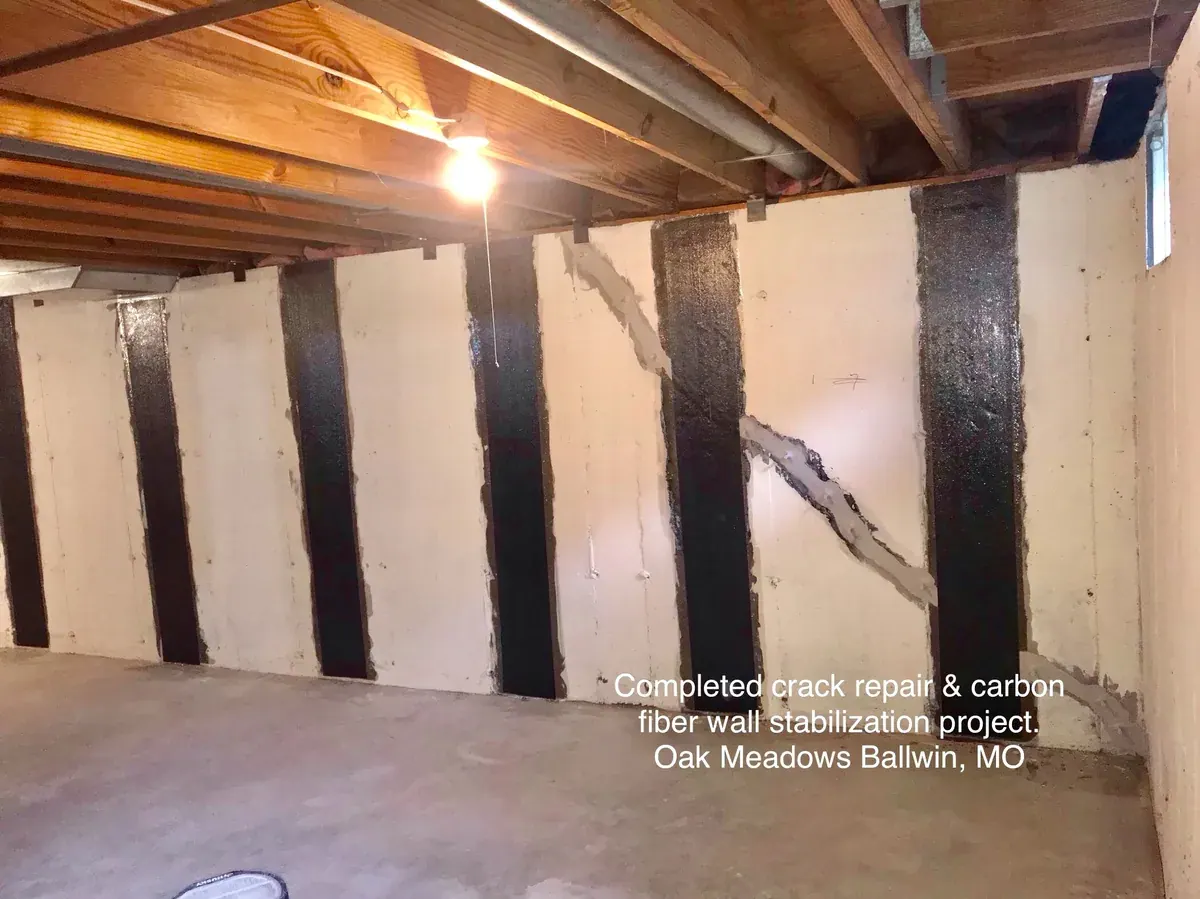
Completed carbon fiber wall stabilization and crack repair in Ballwin, MO — the least invasive bowing wall repair for walls with under two inches of movement.
What causes a wall to bow inward
Bowing walls are almost always a soil-pressure problem, not a concrete problem. The wall itself may have been sound for decades before it started moving. What changes is the force acting on it from outside. In St. Louis, three factors do most of the damage.
The first is expansive clay soil. Much of the metro sits on clay that swells dramatically when it absorbs water and shrinks when it dries. Each wet-dry cycle drives the soil against your foundation with thousands of pounds of lateral force. The U.S. Geological Survey documents how expansive soils cause more property damage nationwide than earthquakes and floods combined, and Missouri's clay belt is squarely in that risk zone.
The second is hydrostatic pressure. When groundwater builds up in saturated soil against the wall, water weight alone adds enormous inward force. Poor exterior drainage, downspouts that dump against the foundation, and heavy seasonal storms all raise that pressure. The third is frost and, in some yards, tree roots — both of which add pressure that a full basement wall was never designed to hold back on its own.
Warning signs of a bowing basement wall
Bowing rarely announces itself all at once. It usually starts subtle and worsens over seasons. If you see any of the following, it is worth a professional look before the movement accelerates.
- A horizontal crack running along the middle of a block or poured wall — the classic signature of lateral pressure
- Stair-step cracks climbing the mortar joints toward the corners
- A visible curve or lean when you hold a level or straightedge against the wall
- The top of the wall tipping inward, or the bottom sliding in at the floor line
- Doors and windows on the floor above beginning to stick as the framing shifts
A useful rule of thumb: vertical cracks are frequently just concrete shrinkage and are often cosmetic, but a horizontal crack paired with any inward curve means the wall is under lateral load. That combination is the point to stop watching and start measuring.
How we repair a bowing wall: three proven methods
There is no single correct fix for every bowing wall. The right method depends on how far the wall has moved, whether it is block or poured concrete, and whether the yard outside is accessible. After a full inspection and measurement of the bow, we recommend one of three engineered solutions — or a combination.
Carbon fiber straps
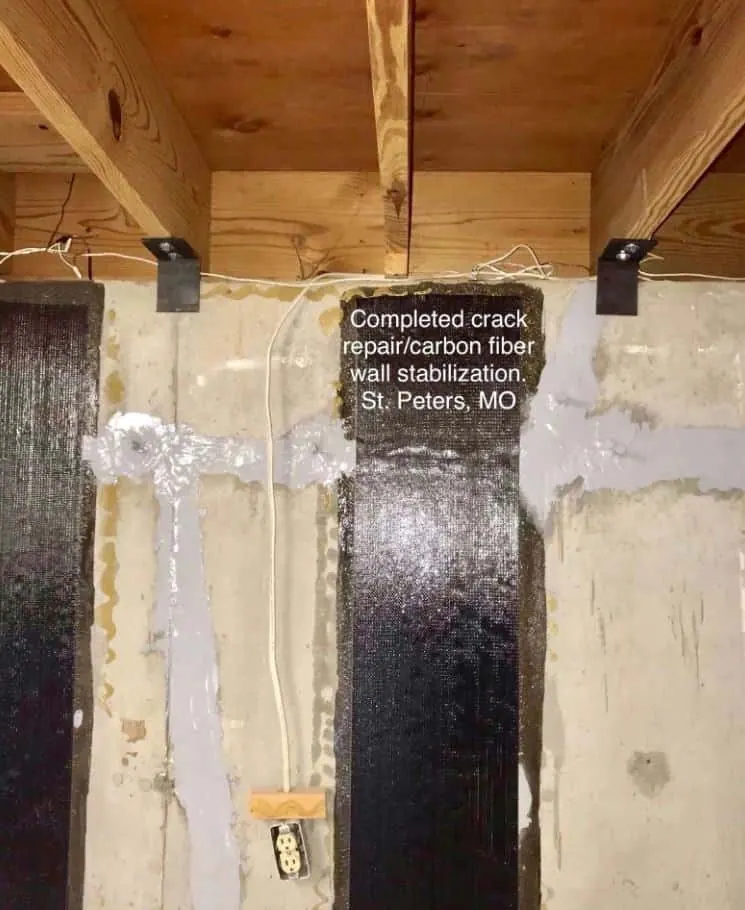
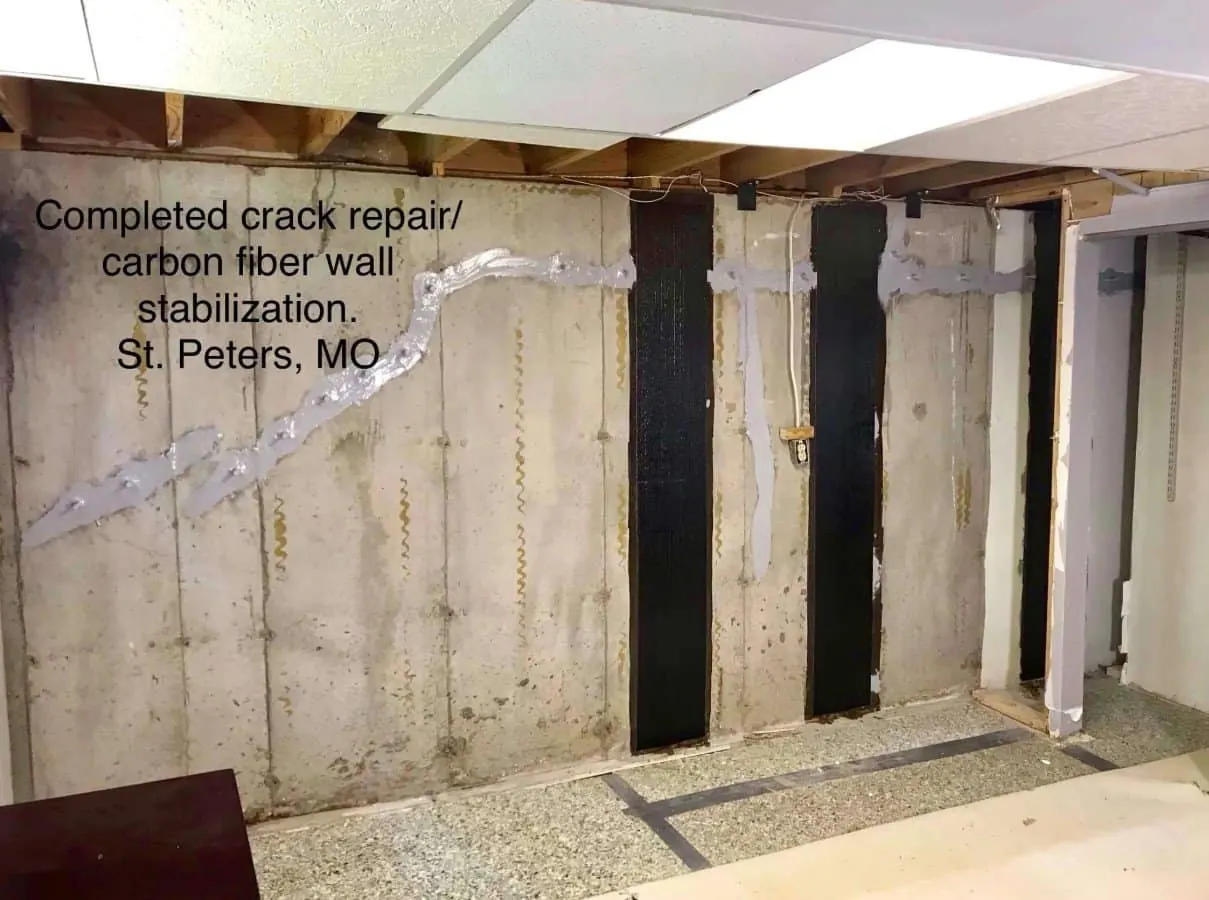
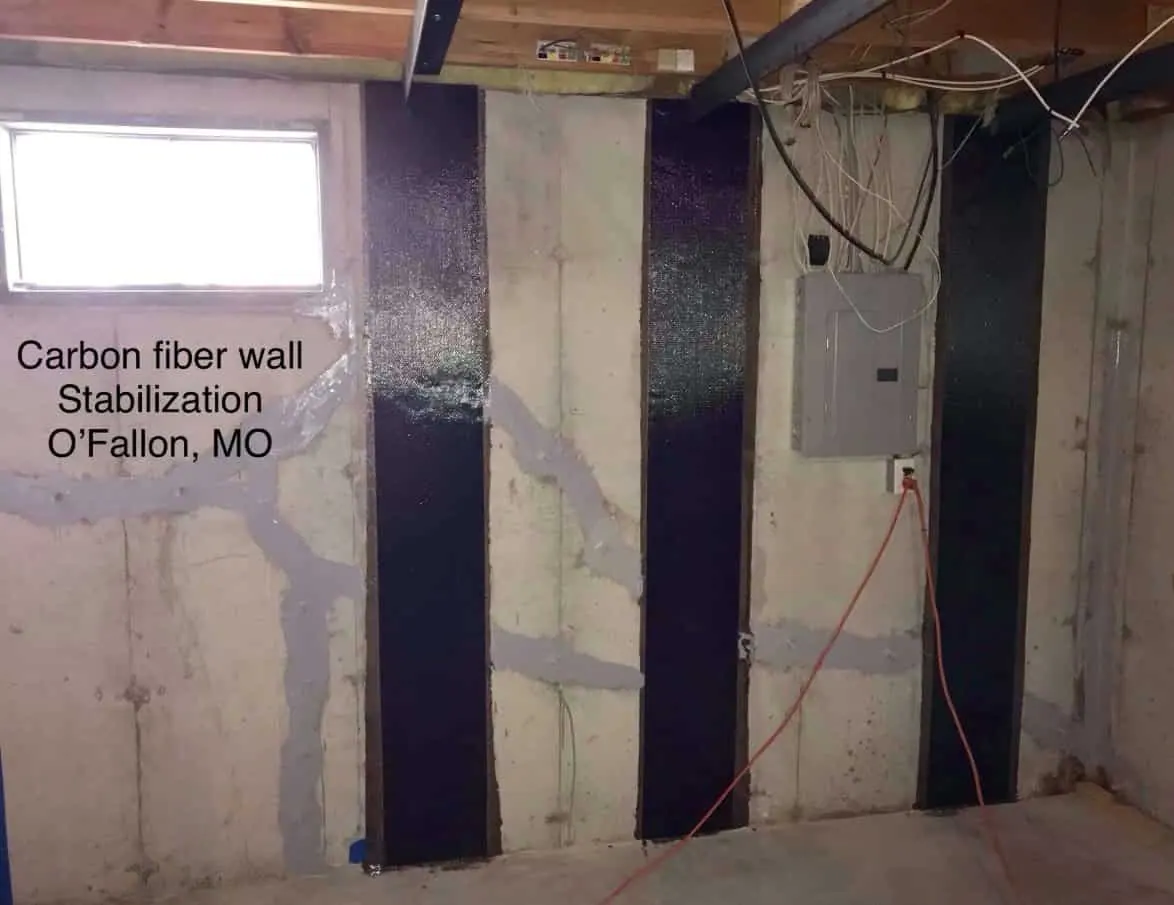
For walls bowed less than roughly two inches, carbon fiber straps are the least invasive and most cost-effective bowing wall repair. The straps are bonded vertically to the wall with a high-strength epoxy, then anchored to the sill plate at the top and the floor slab at the bottom. A 150 GSM carbon fiber strap carries a tensile strength around 213,000 PSI, while your concrete wall holds only 300 to 700 PSI — so the straps take over resisting the inward pressure. Installation is clean, requires no excavation, and the straps can be painted over once cured. The trade-off: carbon fiber stops further movement but does not straighten a wall that has already moved significantly.
Steel I-beams
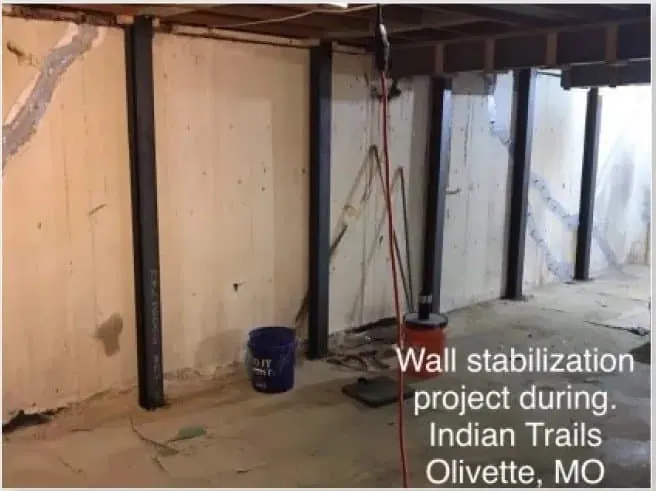
When a wall has bowed past what carbon fiber can hold, steel I-beams are one of the most effective bracing methods available. The beams are set vertically against the wall, anchored into the floor at the bottom and the floor joists at the top. Once in place, they stop further inward movement immediately, and in many installations they can be gradually tightened over time to pull the wall back toward its original position. Steel is the workhorse solution for moderate to severe bowing where lasting structural strength matters more than a completely invisible finish.
Steel I-beams anchored floor-to-joist against a bowing basement wall in St. Louis — the go-to bowing wall repair when movement exceeds what carbon fiber alone can hold.
Wall anchors
Wall anchors (also called plate anchors) stabilize and often straighten a bowing wall by transferring the load to stable soil beyond the pressure zone. A steel plate is placed against the interior of the wall and connected by a threaded rod to an anchor plate buried in the yard, away from the foundation. Tightening the assembly holds the wall and, over time, can draw it back outward. Wall anchors are an excellent choice when there is accessible yard space to place the exterior anchor — and they address the root cause by relieving the soil pressure itself.
Which bowing wall repair method is right for your home
The honest answer is that it comes down to how far the wall has moved and what your basement and yard allow. Here is how the three methods compare at a glance.
| Method | Best for | Straightens wall? | Excavation |
|---|---|---|---|
| Carbon fiber straps | Bowing under ~2 inches | No — stops further movement | None |
| Steel I-beams | Moderate to severe bowing | Often, when tightened over time | None (interior) |
| Wall anchors | Severe bowing with accessible yard | Yes, over time | Exterior anchor placement |
This is exactly why we never quote a bowing wall repair over the phone. Two walls that look similar can need completely different solutions once the bow is measured and the soil conditions are understood. A free on-site inspection is the only way to match the method to the wall — and to make sure you are not paying for more repair than the wall actually needs, or less than it requires to be safe.
What bowing wall repair costs in St. Louis
Most bowing wall repairs in the St. Louis metro fall between $1,500 and $6,000. Where a specific project lands depends on the length of the wall being braced, how many straps or beams are required, the severity of the bow, and which method the wall calls for. Carbon fiber on a single wall with early-stage bowing sits toward the lower end. Multiple walls, steel I-beams, or wall anchors with exterior excavation move toward the higher end.
When you compare quotes, look past the bottom-line number. Ask whether the warranty is lifetime and transferable to the next owner, how many years the company has actually worked in the St. Louis area, and whether the quote addresses the soil pressure causing the bow or only braces the symptom. A repair that ignores drainage and soil load is a repair you may revisit. Every bowing wall repair we perform is backed by a lifetime transferable warranty on the structural work.
Key Takeaways
- Bowing walls are caused by soil pressure — expansive clay and hydrostatic pressure — not by weak concrete
- A horizontal crack plus an inward curve is the clearest sign a wall is under lateral load
- Carbon fiber straps fix bowing under ~2 inches; steel I-beams and wall anchors handle severe bowing and can straighten the wall over time
- St. Louis bowing wall repair typically costs $1,500–$6,000 depending on severity and method
- A bowing wall never stabilizes on its own — the sooner it is braced, the cheaper and simpler the repair
Bowing Wall Repair FAQs
Can a bowed wall be fixed?
Yes. A bowing wall can almost always be repaired without tearing it out. For bowing under about two inches, carbon fiber straps stabilize the wall from the inside with no excavation. For more severe movement, steel I-beams or wall anchors brace the wall and, in many cases, gradually straighten it back toward its original position. The key is acting before the wall shears or fails.
How do you stabilize a bowing wall?
The wall is stabilized by adding a system that resists the inward soil pressure. Carbon fiber straps bond to the wall and anchor top and bottom. Steel I-beams brace vertically from floor to joist. Wall anchors transfer the load to stable soil out in the yard. The right choice depends on how far the wall has bowed and whether the exterior is accessible, which is determined during an on-site inspection.
What causes a wall to bow out?
In St. Louis, bowing walls are driven by expansive clay soil and hydrostatic pressure. Clay swells when wet and pushes against the foundation with thousands of pounds of lateral force, while built-up groundwater adds even more pressure. Frost and tree roots can contribute as well. The wall bows inward because the outside force exceeds what the wall was built to hold back.
How much basement wall bowing is acceptable?
Any measurable inward bowing is a sign of a structural problem and should be inspected. As a general guideline, bowing under roughly two inches can often be corrected with carbon fiber straps, while bowing beyond that typically requires steel I-beams or wall anchors. There is no amount of bowing that safely resolves on its own, so early evaluation is always the right call.
Should I buy a house with bowing basement walls?
A bowing wall is not necessarily a deal-breaker, but you should know the repair method and cost before you close. Have the wall inspected and get a written repair quote, then factor that into your offer. Because most bowing wall repairs in the St. Louis area run $1,500 to $6,000 and come with transferable warranties, a properly repaired wall can be a solved problem rather than an ongoing risk.
Is Your Basement Wall Bowing?
Free inspections · Honest assessments · Lifetime transferable warranty · 30+ years in St. Louis
Get Your Free Bowing Wall Inspection
Tell us what you are seeing and we will schedule a no-pressure inspection. No obligation — just an honest assessment of what your wall needs.
About the Author
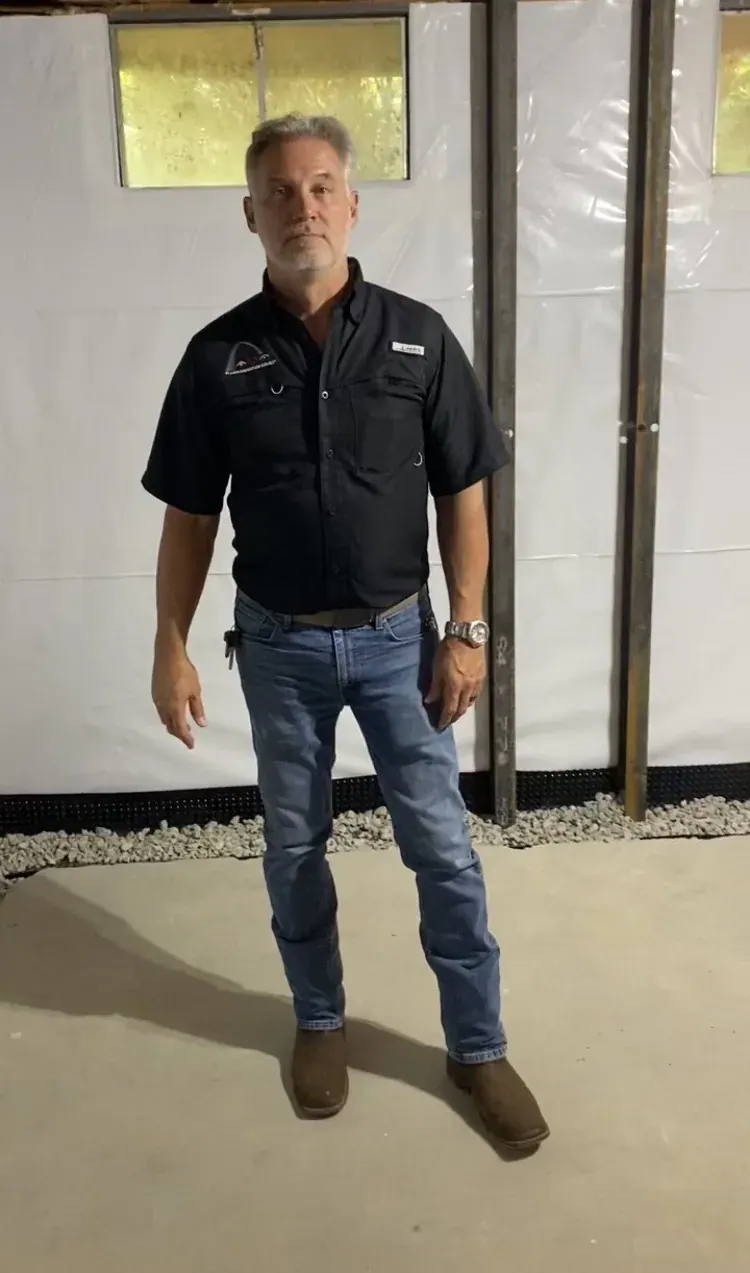
Kent Schrum is the owner of St. Louis Foundation Repairs with 30+ years in foundation repair and structural work. He has personally overseen thousands of bowing wall and foundation repairs across the Greater St. Louis metro area.
Our St. Louis Service Areas
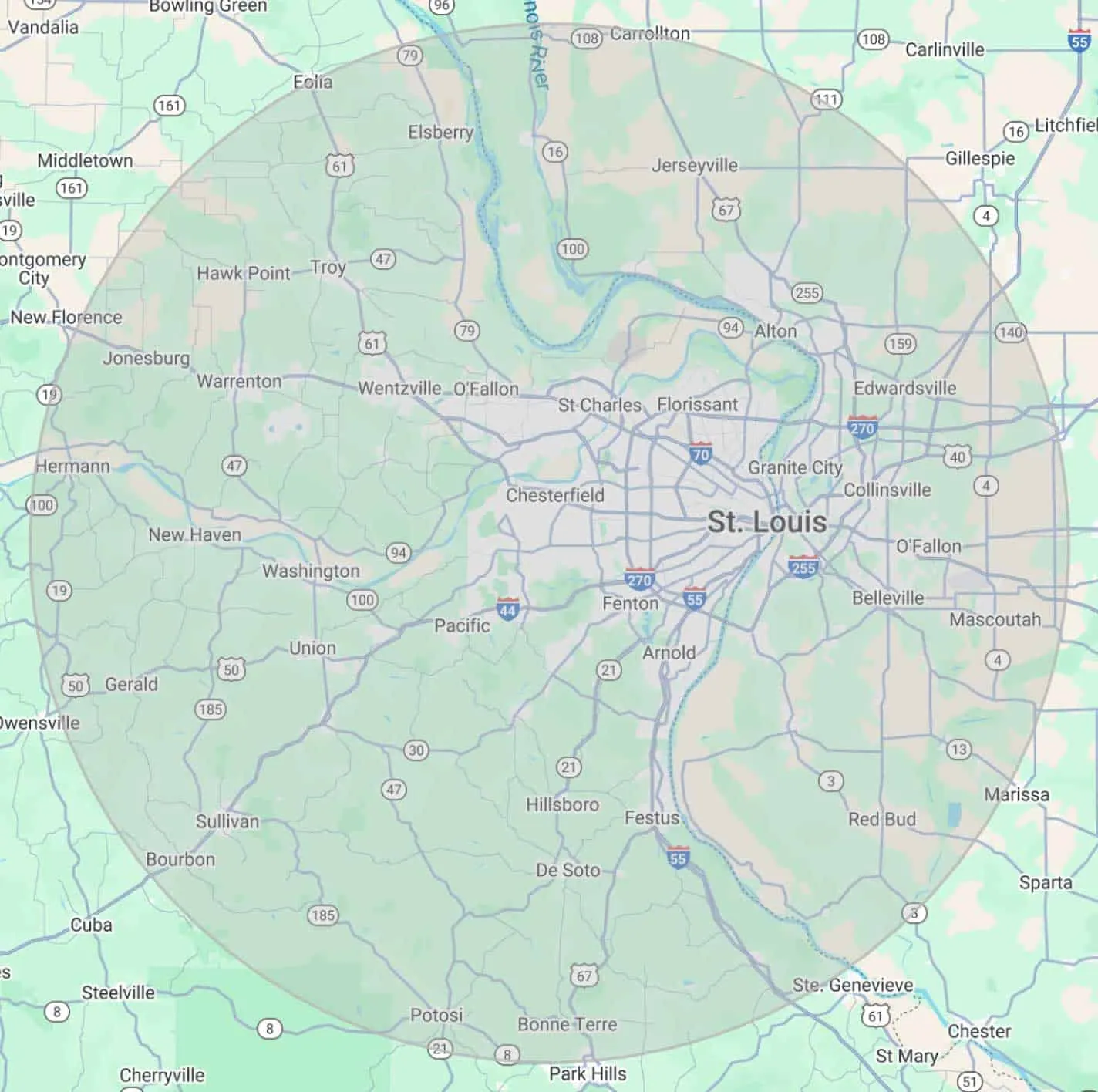
St. Louis Foundation Repairs serves homeowners in St. Louis, MO and the following counties:
- City of St. Louis, MO
- St. Louis County, MO
- St. Charles County, MO
- Jefferson County, MO
- Franklin County, MO
- Lincoln County, MO
- Warren County, MO
- Crawford County, MO
- Phelps County, MO
- Monroe County, IL
- St. Clair County, IL
- Madison County, IL
Get a Free Quote
Get your free online quote today. Free inspections and honest assessments across the St. Louis metro.