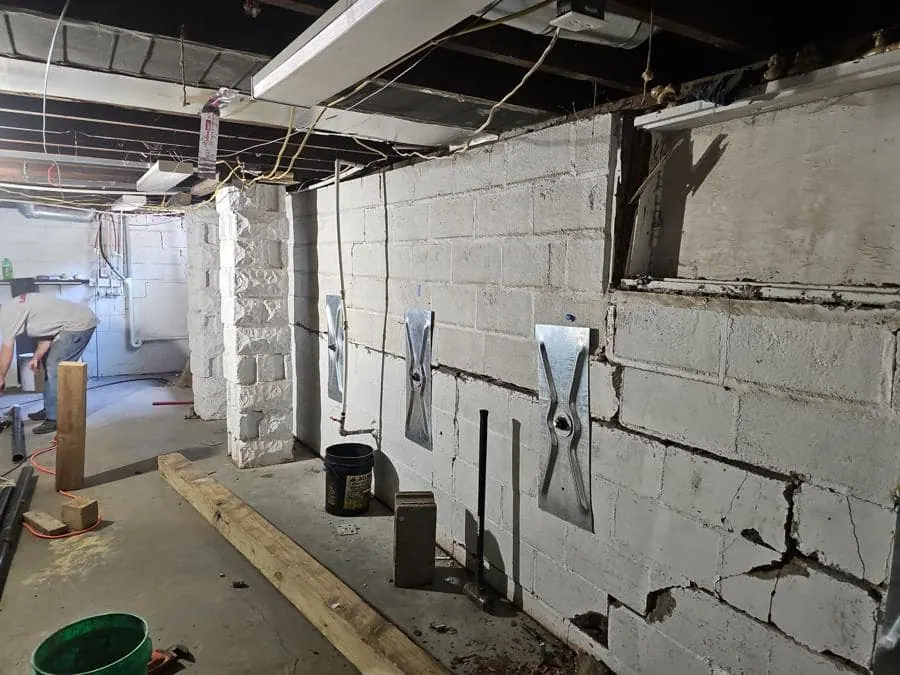
Clay soil foundation damage is one of the most common — and most expensive — problems facing St. Louis homeowners. If you own a home on the Missouri side of the metro, the ground under your foundation is working against you. Much of our region sits on expansive clay, a soil that doesn't just sit there. It expands and contracts with the seasons, and over the years that movement cracks foundations, causes settlement, and bows basement walls across the area.
At St. Louis Foundation Repairs, we've spent 30+ years diagnosing and repairing foundation problems caused by this soil across the Greater St. Louis area. This guide explains how expansive clay actually damages a foundation, which homes are most at risk, and the steps — both preventive and structural — that protect your home for the long term.
Dried, shrinking clay soil pulling away from a foundation — a common sight during St. Louis summers.
The swell-shrink cycle: how seasonal moisture changes move your foundation
Expansive clay is made up of fine mineral particles that absorb water like a sponge. When it rains, the clay takes on moisture and swells — sometimes increasing in volume by 10% or more. When the weather turns hot and dry, that same clay releases its moisture, shrinks, and pulls away from whatever it was pushing against, including the concrete footings of your home.
In St. Louis, this isn't a once-in-a-while event. We get heavy spring rains followed by hot, dry summers, then a freeze-thaw winter — so the soil under your home is constantly cycling between swollen and shrunken. Each cycle nudges the foundation up, down, or sideways by a fraction of an inch. On its own that's nothing. Repeated over years, it cracks concrete, separates walls from floors, and leaves doors and windows that no longer close.
The damage is usually worst where moisture is uneven — for example, when one side of the house stays wet from a downspout while the other dries out under the sun. That difference in soil volume from one corner to another is what turns ordinary clay soil foundation damage from slow, even settling into the cracking and tilting that threatens a home's structure.
Hydrostatic pressure: how saturated clay pushes against basement walls
The swell-shrink cycle attacks from below. Hydrostatic pressure attacks from the side. When clay around your basement becomes saturated — after a heavy rain, or because of poor drainage — the waterlogged soil exerts enormous lateral pressure against your foundation walls.
Because clay drains so slowly, that water doesn't dissipate quickly. It sits against the wall and pushes. This is the same expansive-soil behavior the U.S. Geological Survey identifies as a leading cause of structural damage to homes nationwide. Over time this pressure is what causes basement walls to bow inward, develop horizontal cracks across the middle of the wall, or shear at the base. Horizontal cracking in particular is a serious warning sign — it usually means the wall is losing the fight against the soil behind it.
This is also why so many St. Louis foundation problems show up as water problems first. If you're seeing seepage, efflorescence (white mineral staining), or a musty basement, the same saturated clay driving that water in is also pressing on your walls. Our basement waterproofing and crack repair services are often the first line of defense against this pressure.
A horizontal crack near mid-wall is a classic sign of lateral pressure from saturated clay.
The role of trees, grading, and drainage in managing soil moisture
Because the real culprit is moisture swings, most of what you can do to protect a foundation comes down to keeping the soil around it at a stable, even moisture level. Three things matter most.
Trees and large shrubs. Mature trees planted close to the house draw huge amounts of water out of the clay during dry spells, accelerating shrinkage on that side of the foundation. As a rough rule, large trees should be at least as far from the home as their mature height. Removing or root-pruning a too-close tree can prevent uneven settlement.
Grading. The ground should slope away from your foundation — about six inches of fall over the first ten feet. Flat or reverse grading lets rainwater pool against the foundation, oversaturating the clay exactly where you don't want it.
Drainage. Gutters and downspouts should carry roof water several feet away from the house, not dump it at the corners. Clogged gutters and short downspout extensions are two of the most common — and cheapest to fix — contributors to foundation movement we see in St. Louis homes.
None of these reverse existing structural damage, but they slow or stop the moisture swings that cause it, which protects any repair you do invest in.
Foundation types most vulnerable to clay soil foundation damage
Clay affects every foundation, but some are more exposed to clay soil foundation damage than others.
- Poured concrete and block basements — most common in St. Louis, and most prone to bowing walls and horizontal cracks from lateral clay pressure.
- Slab-on-grade foundations — vulnerable to heaving and cracking when clay under the slab swells unevenly.
- Crawl space foundations — piers and footings can settle independently as the clay beneath them shifts, leading to sagging floors above.
- Older homes (pre-1980) — frequently built with shallow footings that don't reach below the active clay zone, so they move with the seasons.
Newer subdivisions aren't immune either. Homes built on disturbed or poorly compacted fill soil — common across fast-growing parts of St. Charles and West County — can settle aggressively in their first decade as that fill consolidates on top of native clay.
Preventive measures every Missouri homeowner should take
You can't change the soil your home sits on, but you can manage how it behaves. A short maintenance checklist that genuinely reduces clay-driven foundation stress:
- Keep gutters clean and extend downspouts at least 4–6 feet from the foundation.
- Maintain positive grading that slopes away from the house on all sides.
- During droughts, water the soil around the foundation slowly and evenly to prevent extreme shrinkage and gapping.
- Keep large trees a safe distance from the foundation, and watch for roots seeking moisture near the house.
- Walk your basement a couple of times a year and note any new cracks, bowing, or moisture — early problems are far cheaper to fix.
The key takeaway is this: foundation issues virtually never resolve on their own, and the longer they're left unaddressed, the more extensive and expensive the repair becomes. A free professional inspection gives you the information you need before a minor crack becomes a structural project.
Professional solutions when prevention isn't enough
When clay soil foundation damage has already moved a foundation, maintenance alone won't bring it back. That's where engineered repairs come in, matched to the type of damage:
- Push and helical piers drive down past the active clay to stable load-bearing strata, stopping settlement and often lifting the foundation back toward level. See our foundation piering services.
- Wall anchors and carbon-fiber reinforcement counteract the lateral pressure causing bowing walls and horizontal cracks.
- Interior drainage and waterproofing relieve the hydrostatic pressure that saturated clay creates against the walls.
- Polyurethane concrete lifting re-levels slabs, driveways, and patios that have settled as the clay beneath them shifted.
If you're dealing with any of this anywhere in the Greater St. Louis area, St. Louis Foundation Repairs offers free inspections and no-pressure quotes. With 30+ years of hands-on experience and lifetime transferable warranties on all structural repairs, we provide solutions built to outlast the soil that caused the problem.
Our owner, Kent Schrum, has 30+ years in foundation repair and is personally involved in every project. We treat every home as if it were our own.
Call us today at (314) 520-9515 or request your free quote online. We serve the entire Greater St. Louis metro area including St. Louis, St. Charles, O'Fallon, Chesterfield, Florissant, Ballwin, Kirkwood, Wentzville, and more.
Key Takeaways
- Missouri's expansive clay swells when wet and shrinks when dry — repeated cycles crack and tilt foundations over time.
- Saturated clay also creates hydrostatic pressure that bows basement walls and causes horizontal cracks.
- Managing moisture through grading, drainage, and tree placement is the most effective prevention.
- Once movement occurs, engineered fixes — piering, wall anchors, waterproofing, concrete lifting — restore stability.
- Schedule a free inspection at the first sign of new cracks or bowing.
About the Author
Kent Schrum is the owner of St. Louis Foundation Repairs with 30+ years in foundation repair. He has personally overseen thousands of foundation repair projects across the Greater St. Louis metro area.
Related: Foundation Piering · Crack Repair · Foundation Repair FAQs · Recent Projects Gallery
Concerned About Your Foundation?
Free inspections · Honest assessments · 30+ years in the St. Louis area
Filed under:
About St. Louis Foundation Repairs. Family-owned foundation repair and basement waterproofing contractor serving the Greater St. Louis metro since 1992. Owner Kent Schrum has personally overseen thousands of crack repair, waterproofing, piering and concrete lifting projects.
Request a free inspection or call
(314) 520-9515.