

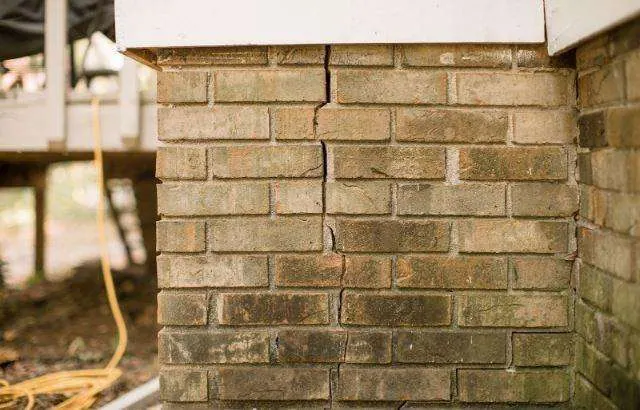
A widely-cited Homecity article on drought and foundations explains why this happens — and why homes in clay-heavy regions like ours are especially vulnerable. Here’s a St. Louis homeowner’s breakdown of what they cover and what it means for your property.
Why Drought Causes Foundation Settling
Clay soil expands when wet and contracts when dry. During extended drought, the soil under and around your foundation pulls away from the footings, leaving gaps. The weight of your home then presses into the voids, causing the foundation to shift, crack, and settle unevenly. When rain finally returns, the soil expands again — but rarely uniformly — which can drive new cracks or heave one side of the foundation upward.
Brick homes are at higher risk because brick is heavier than wood-frame or sided construction, putting more downward pressure on already-stressed soil. A large share of older St. Louis homes are full brick, which is exactly the wrong material profile for our drought-prone clay.
Warning Signs of Drought-Related Foundation Damage
If we’ve had a dry summer, watch for:
- New or widening cracks in basement walls, drywall, or brick exteriors
- Doors and windows that suddenly stick or won’t latch
- Gaps between exterior brick and window or door frames
- Visible separation between your foundation and the surrounding soil
- Uneven or sloping floors
- Stair-step cracks in block or brick foundation walls
Damage from a previous drought can show up months or years later, even after normal rainfall returns. If you bought your home recently, the issue may pre-date your ownership.
How to Protect Your Foundation During a St. Louis Drought
The most effective prevention is keeping the soil around your foundation evenly moist:
- Use a soaker hose 2–5 feet out from the foundation, running it slowly so water absorbs rather than runs off
- Water every other day during extended dry stretches (follow any local watering restrictions)
- Add mulch beds around the perimeter to slow evaporation
- Keep large trees and shrubs well away from the foundation — their root systems pull moisture out of the soil under your home
- Don’t overdo it — saturated soil around the foundation creates a different set of problems
What to Do If You Already See Damage
Surface crack sealers from the hardware store will not fix a settling foundation. They mask the symptom while the underlying soil problem continues. If you’re seeing the warning signs above, the right approach depends on severity:
- Hairline cracks that don’t widen: monitor and document with photos
- Active or widening cracks, sticking doors, or sloping floors: get a professional evaluation
- Significant settling: helical or push piers may be needed to stabilize the affected sections
We’ve been repairing drought-related foundation settling across St. Louis, St. Charles, and Jefferson County for over 30 years. If you’re concerned the current drought is affecting your home, call us at (314) 520-9515 for a free evaluation.
Filed under: